
How to Keep Your Kidneys Healthy Naturally
Your kidneys are like your body’s natural filtration system, removing waste, balancing fluids, regulating blood pressure, and maintaining essential minerals. Despite their importance, kidney health is often overlooked. Knowing how to keep your kidneys healthy naturally can help prevent serious problems like kidney disease, stones, or infections.
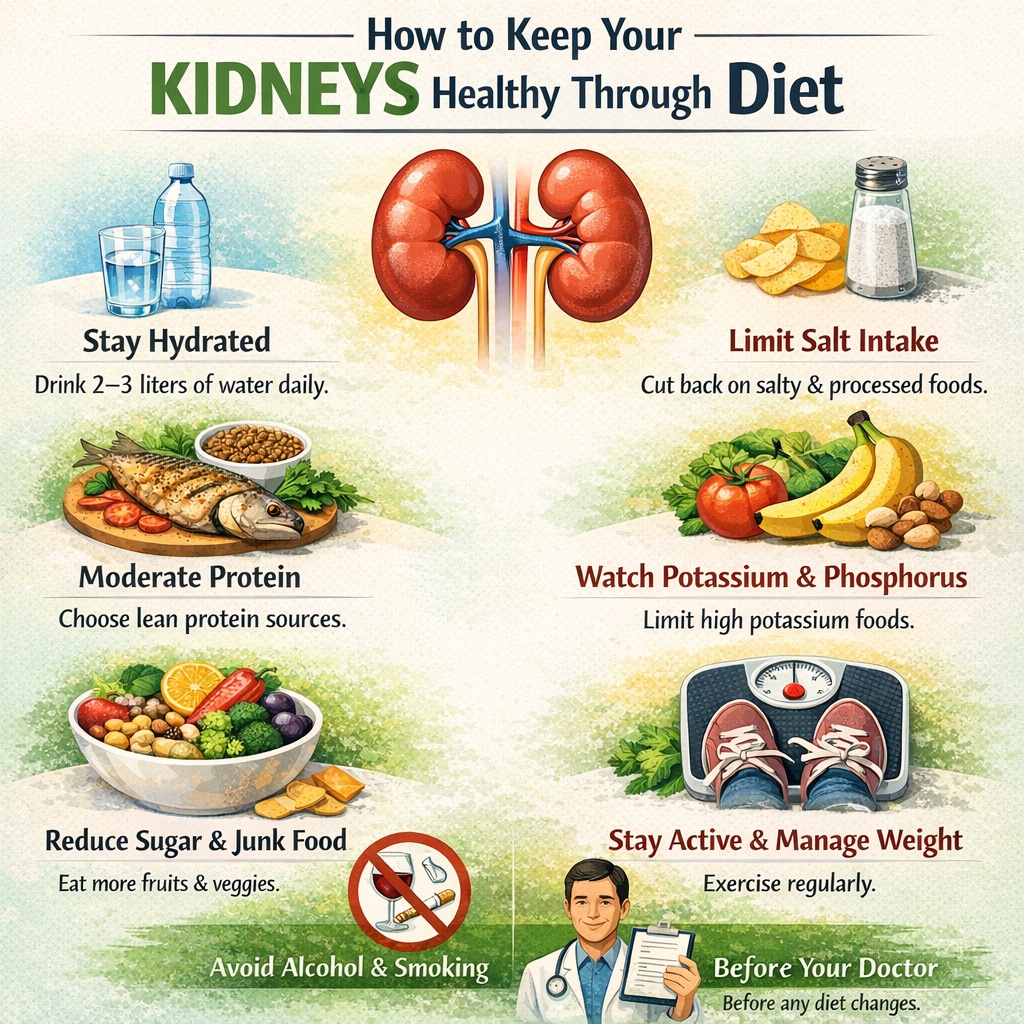
Diet That Protects Your Kidneys
Healthy kidneys are vital for filtering waste, balancing fluids, and keeping your body in check. Your diet plays a key role in maintaining kidney health. Here’s how you can support your kidneys with everyday nutrition.
I will now provide a list that includes all the details.
Stay Hydrated: Drink 2–3 liters of water daily to help flush out toxins and support kidney function. If you have kidney disease, consult your doctor about the right amount for you.
Limit Salt Intake: High sodium can increase blood pressure and strain your kidneys. Avoid processed foods, fast food, salty snacks, and pickles. Opt for natural seasonings like herbs and spices.
Moderate Protein Consumption: Too much protein, especially from red meat and cheese, can stress your kidneys. Choose lean sources such as fish, lentils, beans, and vegetables.
Watch Potassium and Phosphorus: For people with kidney issues, excessive potassium and phosphorus can be harmful. Foods such as bananas, tomatoes, potatoes, and nuts should be consumed in moderation if advised by your doctor.
Reduce Sugar and Processed Foods: Excess sugar and highly processed foods can negatively impact kidney health. Focus on whole grains, fresh fruits, and vegetables to nourish your body.
Maintain a Healthy Weight and Stay Active: A healthy weight reduces stress on your kidneys. Incorporate regular light exercise such as walking, yoga, or stretching into your routine.
Avoid Alcohol and Smoking: Both alcohol and smoking can harm kidney function. Reducing or eliminating these habits can significantly benefit your overall health.
If you want to know more detailed information about the kidneys, then check out the website link below: https://en.wikipedia.org/wiki/Kidney
Common causes of kidney failure
1. DIABETES
Diabetes is one of the most common causes of kidney damage around the world. When blood sugar levels stay high for a long period of time, it can slowly harm many organs in the body, including the kidneys. The kidneys are responsible for filtering waste products and excess fluid from the blood. However, uncontrolled diabetes can damage the tiny filtering structures inside the kidneys and reduce their ability to function properly.
Over time, the small blood vessels inside the kidneys become thickened and weakened due to constant exposure to high sugar levels. This damage makes it harder for the kidneys to filter waste from the blood. As a result, harmful substances and extra fluid may start to build up in the body.
One of the earliest signs of kidney damage related to diabetes is the presence of protein in the urine. Normally, the kidneys prevent important proteins from leaving the body through urine. However, when the kidney filters become damaged, proteins such as albumin may leak into the urine. This condition is known as Diabetic Nephropathy and is one of the most common complications of long-term diabetes.
As kidney damage progresses, the kidneys gradually lose their ability to remove toxins and regulate fluid balance. People may begin to experience symptoms such as swelling in the feet or ankles, fatigue, and changes in urination patterns. In many cases, the damage develops slowly and may not cause noticeable symptoms in the early stages.
If the condition continues to worsen without proper treatment, it may eventually lead to Kidney Failure. At this stage, the kidneys can no longer perform their vital functions, and medical treatments such as dialysis or a kidney transplant may be required.
Managing diabetes effectively is the most important step in protecting kidney health. Maintaining healthy blood sugar levels, controlling blood pressure, eating a balanced diet, and having regular medical checkups can help reduce the risk of diabetic kidney disease. Early detection and proper care play a key role in preventing serious kidney complications associated with diabetes.
If You Need More Information & guidelines, like how to keep your Kidneys healthy naturally , Please Check it: https://healthyfitnessusa.com/cholesterol-free-life/
2. High Blood Pressure
High blood pressure, also known as hypertension, is one of the major causes of kidney damage. The kidneys depend on healthy blood vessels to filter waste and excess fluid from the blood. When blood pressure remains high for a long time, it puts extra force on the blood vessels throughout the body, including those in the kidneys. Over time, this pressure can damage the small blood vessels that help the kidneys function properly.
Inside the kidneys there are millions of tiny filtering units supplied by very small blood vessels. Persistent high blood pressure can cause these vessels to become narrow, stiff, or weakened. When this happens, the kidneys receive less blood and oxygen than they need. As a result, their ability to filter waste from the blood gradually decreases.
As kidney damage progresses, the body may begin to retain extra fluid and waste products. This can lead to swelling in the legs, ankles, or feet. Some people may also experience fatigue, difficulty concentrating, or changes in urination patterns. In many cases, kidney damage from high blood pressure develops slowly and may not show obvious symptoms in the early stages.
If hypertension continues without proper treatment, the damage to the kidneys can become severe. Eventually, the kidneys may lose most of their filtering ability, leading to Kidney Failure. At this stage, the kidneys can no longer remove harmful toxins and excess fluid from the body. Medical treatments such as dialysis or a kidney transplant may then be required to replace the lost kidney function.
Managing blood pressure is essential for protecting kidney health. Doctors usually recommend maintaining a healthy diet, reducing salt intake, staying physically active, and taking prescribed medications to control blood pressure. Regular medical checkups and kidney function tests are also important for early detection of kidney problems related to hypertension.
In summary, long-term high blood pressure can damage the blood vessels in the kidneys, reducing their ability to filter the blood effectively. Without proper management, this damage can eventually lead to kidney failure. Maintaining healthy blood pressure levels is therefore one of the most important steps in preventing kidney-related complications.
So, to keep the kidneys naturally healthy, you must control these two factors
For more information, like how to keep your Kidneys healthy naturally, you can see this: https://www.youtube.com/watch?v=4AJn0VB-mfs
Some more important factors
Best Exercises to Keep Your Kidneys Healthy
While you cannot directly “strengthen” your kidneys through exercise, staying physically active plays a crucial role in maintaining kidney health. Regular exercise helps control blood pressure, improve blood circulation, and manage blood sugar—all of which reduce stress on the kidneys.Cardiovascular (Aerobic) Exercises
Examples: Walking, jogging, swimming, cycling
Benefits:
Helps regulate blood pressure
Improves blood flow to the kidneys
Supports overall heart and vascular health
Recommendation: 30 minutes per day, 5 days a week, at moderate intensity
Strength Training
Examples: Bodyweight exercises (squats, lunges, push-ups), light dumbbells
Benefits:
Builds muscle and boosts metabolism
Helps maintain a healthy weight, reducing kidney strain
Recommendation: 2–3 days per week, moderate weights
Flexibility and Stretching
Examples: Yoga, Pilates, general stretching exercises
Benefits:
Improves circulation and oxygen flow
Reduces muscle tension and stress
Supports better overall kidney function
Stress-Relief Exercises
Examples: Deep breathing, meditation, light yoga
Benefits:
Lowers stress hormone levels
Helps control high blood pressure
Indirectly protects kidney health

Top Vegetables for Healthy Kidneys
Cabbage – Low in potassium, high in fiber; helps remove toxins and supports kidney function.
Cauliflower – Packed with vitamin C, folate, and fiber; low in potassium; promotes detoxification.
Bell Peppers – High in vitamins A, C, and B6; antioxidants protect kidney cells; low in potassium.
Garlic – Anti-inflammatory and antioxidant; lowers cholesterol and blood pressure; flavor enhancer without salt.
Onion – Contains flavonoids and antioxidants; protects kidneys from oxidative stress; low potassium.
Carrots – High in beta-carotene (vitamin A); supports kidney and eye health; moderate potassium.
Cucumber – Hydrating, high water content; helps flush toxins; low sodium and potassium.
Broccoli – Rich in fiber, vitamin C, and antioxidants; reduces kidney inflammation; supports heart and kidney health.
Zucchini – Low in potassium and phosphorus; provides antioxidants; reduces kidney workload.
If You Need More Information & guidelines, like how to keep your Kidneys healthy naturally, Please Check it: https://healthyfitnessusa.com/cholesterol-free-life/