
Reason for Hair Fall in Males
Hair fall is a common problem nowadays.
Why Women Experience Hair Fall: Key Reasons
Hormonal Imbalance: Changes in hormones due to pregnancy, childbirth, menopause, or thyroid disorders can disrupt the hair growth cycle and lead to hair loss.
High Stress Levels: Long-term mental or physical stress may cause hair follicles to enter a resting phase, leading to noticeable hair shedding.
Lack of Essential Nutrients: Deficiency of nutrients such as iron, protein, vitamin D, and B-complex vitamins can weaken hair strands and slow down hair growth.
Unhealthy Eating Habits: Following extreme diets or skipping meals may reduce the intake of nutrients required to maintain strong and healthy hair.
Underlying Health Issues: Medical conditions like anemia, PCOS, and thyroid-related problems are often linked to increased hair fall in women.
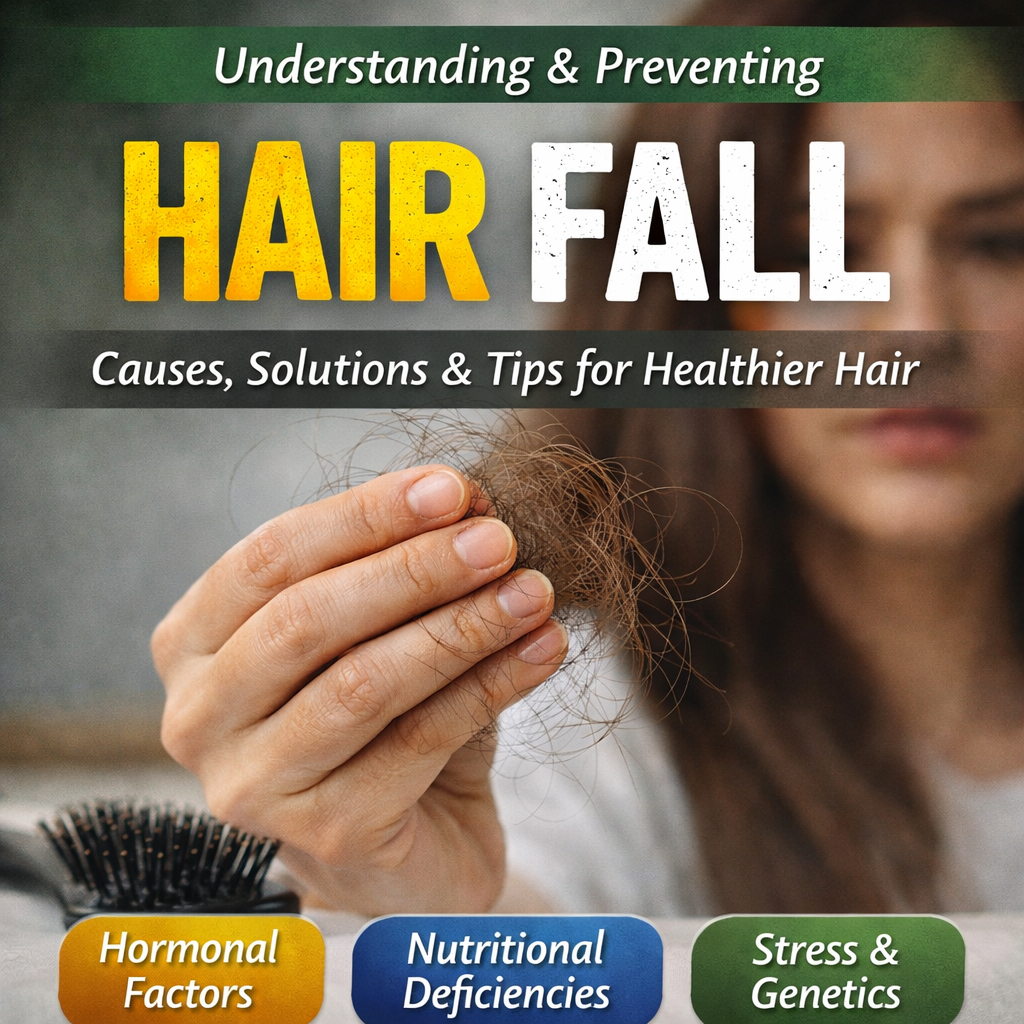
Some scientific concepts have been discussed here.
Hair loss is a normal biological phenomenon that is closely linked to the natural cycle of hair growth. From a scientific perspective, hair grows through three main stages: an active growth phase, a short transitional phase, and a resting phase. Shedding around 50 to 100 strands of hair each day is generally considered normal. Hair loss becomes concerning when an unusually high number of hairs remain in the resting phase and new hair growth does not occur in those areas. This type of condition is commonly referred to in medical science as telogen effluvium.
Hormonal balance plays a crucial role in maintaining healthy hair growth. Hormones such as estrogen, androgens, and thyroid hormones influence how long hair continues to grow and how strong it remains. Changes in hormone levels during pregnancy, after childbirth, menopause, or due to thyroid disorders can disrupt the hair growth cycle and increase hair shedding. For this reason, women often notice increased hair fall during periods of hormonal fluctuation.
Research indicates that proper nutrition is essential for strong and healthy hair. Deficiencies in key nutrients, including iron, protein, vitamin D, and vitamin B12, can weaken hair follicles and slow down the production of new hair strands. When poor dietary habits continue over an extended period, hair loss may become persistent rather than temporary.
Both psychological and physical stress are well-documented contributors to hair loss. High stress levels raise the production of cortisol, a hormone that can interfere with the normal hair growth cycle. As a result, a large number of hair follicles may enter the resting phase simultaneously, leading to noticeable hair shedding weeks or months later. Although stress-related hair loss is often temporary, prolonged stress may require medical evaluation.
Genetic factors can also contribute to hair thinning, a condition known as androgenetic alopecia. In this case, inherited sensitivity causes hair follicles to gradually shrink, producing finer and weaker hair over time. This form of hair loss usually develops slowly and becomes more visible with increasing age.
Additionally, several health conditions—including anemia, polycystic ovary syndrome (PCOS), autoimmune diseases, and scalp infections—have been scientifically linked to increased hair loss. Addressing and treating the underlying medical condition often helps improve hair health and reduce excessive hair fall.
Medical Notice:
The information provided in this article is for general educational and informational purposes only. It is not intended as a substitute for professional medical advice, diagnosis, or treatment. If you are experiencing hair loss or any related health condition, please consult a qualified healthcare professional for proper evaluation and guidance.
For more information : https://www.mayoclinic.org/diseases-conditions/hair-loss/in-depth/hair-loss/art-20048204
Some Basic Reasons for Hair Fail in Mail
While Washing Hair
Washing hair the right way can help reduce unnecessary hair fall and maintain scalp health. Hair should be washed with lukewarm or normal temperature water, as very hot water can dry out the scalp and weaken hair roots. Before applying shampoo, the hair should be thoroughly wet to ensure even cleansing and reduce friction.
A mild, sulfate-free shampoo should be used, as harsh chemicals can strip away natural oils and cause dryness. Shampoo should be gently massaged onto the scalp using fingertips, not nails, to avoid scalp irritation. Rubbing or scrubbing the hair aggressively can increase breakage and hair fall.
Hair does not need to be washed every day unless the scalp becomes excessively oily or dirty. Washing hair two to three times a week is generally sufficient for most people. Overwashing may remove essential natural oils, which can weaken the hair over time.
After shampooing, a light conditioner can be applied to the mid-lengths and ends of the hair, avoiding the scalp. Conditioner helps reduce tangling and breakage. Hair should be rinsed thoroughly to remove all product residue.
After bathing, hair should be gently dried using a soft towel. Rubbing wet hair roughly can cause hair strands to break easily. It is best to let hair air-dry whenever possible. If a hair dryer is used, it should be set to a low heat setting.
Applying essential oils helps keep hair healthy
To keep hair strong and reduce excessive hair fall, it is essential to ensure the scalp stays well-nourished with natural oils. The scalp naturally produces sebum, which acts as a protective layer for hair strands and provides essential moisture. However, factors like frequent washing, pollution, or dry weather can deplete these natural oils, leaving hair more prone to breakage.
Using a small amount of natural oils—such as coconut, almond, or argan oil—once or twice a week can help maintain proper scalp hydration, reinforce hair roots, and minimize hair damage. It’s important to apply oil moderately, as too much can make the scalp greasy and attract dirt, potentially causing other scalp concerns.
Massaging the oil gently into the scalp not only spreads it evenly but also stimulates blood flow, allowing nutrients to reach the hair follicles more effectively. For best results, leave the oil on for 30 to 60 minutes before washing, or in some cases, overnight, so the scalp and hair can fully absorb its benefits.
For your consideration :
Hair fall is a common problem at this time. Frustration, Tension a lot of other factors are major reasons for hair fall in male. Be free and stay with us, we will guide you in the right way.
For more information about healthy body you can visit: https://healthyfitnessusa.com/success-stories-of-hair-regrowth-naturally/